Introduction
It was during one of those lazy Sunday afternoons, scrolling through my phone while half-watching a documentary about Navy Federal and Israel Adesanya, that I realized how much my wardrobe had shifted toward comfort over style. The contrast between Adesanya’s disciplined athletic wear and my own search for something that felt both put-together and completely relaxed struck me as oddly parallel journeys. We were both seeking clothing that served a purpose beyond mere appearance, though our contexts couldn’t have been more different. This realization sent me on a quest for pants that could bridge the gap between lounging at home and stepping out for casual errands, something that felt intentional yet effortless.
There’s something about watching disciplined athletes like Israel Adesanya that makes you reconsider your own daily choices, including what you wear. While his needs are obviously performance-focused, mine leaned more toward finding something that wouldn’t make me feel like I was either wearing pajamas outside or constricted in denim on my day off. The mention of Navy Federal in the documentary, though unrelated to clothing, got me thinking about reliability and trust—qualities I wanted in my everyday wear too. Comfort shouldn’t mean sacrificing style entirely, nor should practical clothing feel like a compromise.
This search led me to consider what truly matters in casual pants. I didn’t want something that looked like activewear but also didn’t want stiff, formal trousers. The balance seemed elusive until I started paying attention to fabrics and construction rather than just aesthetics. Cotton kept coming up in my research as the ideal material for breathability, especially during warmer months when synthetic blends can feel clingy and uncomfortable. The idea of a smocked waist appealed to me because it promised flexibility without the bulk of elastic bands or drawstrings.
Real-life Context
My typical week involves a mix of working from home, running errands, and occasionally meeting friends for coffee or a walk. Most days start with several hours at my desk, then transition to outdoor activities or quick trips to the store. I needed pants that could handle this variety without requiring multiple outfit changes. Previously, I’d default to jeans for outings and sweatpants for home, but neither felt quite right—jeans could be restrictive during long sitting periods, while sweatpants sometimes made me feel underdressed if I needed to pop into a store unexpectedly.
The weather where I live tends to be mild to warm for most of the year, making breathability a priority. I’ve tried linen pants in the past but found they wrinkled too easily for my liking, often looking messy after just an hour of wear. Other cotton blends sometimes lost their shape or became see-through after washing, which was frustrating when I wanted something reliable for daily use. Pockets were another consideration—I appreciate having somewhere to put my phone, keys, or lip balm without carrying a bag everywhere, but many casual pants either lack pockets entirely or have ones too small to be useful.
Color and pattern mattered more than I initially thought. Solid colors can be versatile but sometimes feel boring, while loud prints might limit how often I’d wear them. I wanted something with enough visual interest to feel special but neutral enough to pair with various tops in my wardrobe. The sizing was another factor—having experienced the disappointment of ordering pants online only to find they ran too small or large, I appreciated detailed size charts and multiple color options that allowed me to choose what suited my preferences best.
Care instructions also playe into my decision. As someone who prefers to minimize laundry complexity, hand-wash-only items often end up neglected in my closet. Yet I’ve learned that some fabrics truly do last longer with gentler treatment, so I was willing to consider it if the benefits outweighed the inconvenience. The dimensions of the pants mattered too—not just the waist and length, but how they’d fit through the hips and thighs, areas where many pants either pull uncomfortably or bunch unattractively.
Observation
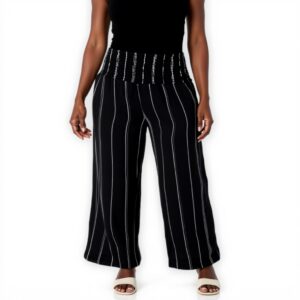
When the Billabong New Waves Stripe Pants arrived, I noticed immediately how lightweight they felt while still having substantial fabric. The 100% cotton composition was evident in the soft texture against my skin, unlike some cotton blends that include polyester and feel slightly synthetic. The smocked waist stretched comfortably without digging in, something I appreciated during long periods of sitting. What surprised me was how the smocking provided enough tension to keep the pants secure without feeling tight, adapting to different positions throughout the day.
The stripes added visual interest without being overwhelming, making them easy to pair with solid-colored tops. I chose the Clear Sky color initially, liking how the light blue and white stripes felt fresh and appropriate for various settings. The front and back pockets were deeper than I expected, actually capable of holding my phone securely without it threatening to fall out when I sat down. This practical feature made them more functional than many similar styles I’d tried, where pockets were often decorative rather than usable.
Wearing them around the house first, I noticed how the cotton fabric breathed well, preventing that stuffy feeling I sometimes get with thicker materials. Moving from desk work to household chores felt seamless—the pants didn’t restrict bending or stretching, and the smocked waist moved with me rather than against me. The length hit just at my ankles, which worked well with both sneakers and sandals, avoiding the awkward too-short or too-long dilemma I’ve experienced with other casual pants.
Taking them out for errands, I found they transitioned well from indoor to outdoor settings. The cotton didn’t cling uncomfortably in warmer temperatures, and the relaxed fit felt appropriate for casual environments like coffee shops or grocery stores. What stood out was how they maintained their shape throughout the day—no bagging out at the knees or becoming misshapen in the seat area, common issues with some cotton garments. The stripes drew occasional compliments, suggesting they had enough style to be noticed without appearing try-hard.
After several wears, I noticed the fabric had softened further without thinning or pilling. The colors remained vibrant despite exposure to sunlight during outdoor activities. The smocked waist showed no signs of stretching out permanently, returning to its original shape after each wear. The pockets maintained their integrity, with stitching that held firm even when I carried slightly heavier items like my phone and keys simultaneously.
Reflection
I didn’t realize at the time how much the simple combination of thoughtful design elements would impact my daily comfort. The smocked waist, which I initially viewed as just a stylistic choice, proved to be the feature that made these pants work across different activities and body positions throughout the day. It provided just enough give during sedentary periods while maintaining enough structure to look intentional during outings. This balance between flexibility and form is something I’ve rarely found in casual pants, which tend to lean too far in one direction or the other.
The 100% cotton construction contributed more to my overall satisfaction than I anticipated. In a market saturated with blends and synthetic materials, having pure cotton meant better temperature regulation and a softer feel against my skin, especially important during longer wearing periods. I reflected on how often we compromise on fabric quality for the sake of convenience or cost, when sometimes the simpler, natural option provides better performance for everyday use. The hand wash care requirement, which I’d initially viewed as a drawback, became a minor ritual I didn’t mind—the pants dried quickly and maintained their quality better than machine-washed items in my wardrobe.
The pocket placement and depth demonstrated how small design decisions can significantly enhance functionality. Having both front and back pockets that were actually usable meant I could distribute items comfortably rather than cramming everything into one pocket or resorting to carrying a bag for short outings. This seemingly minor feature actually changed how I moved through my day, with less fuss over where to put essentials. The dimensions—particularly the rise and leg width—created a silhouette that felt current without being trend-driven, something I appreciated as someone who prefers clothing that lasts beyond seasonal fashions.
Available in multiple colors and sizes, these pants accommodated different preferences without sacrificing the core features that made them work well. The range from X-Small to X-Large meant they could suit various body types, while the color options allowed for personal expression within the same practical framework. This versatility made me consider how often we settle for limited options in casual wear, when thoughtfully designed pieces can actually serve multiple needs within our wardrobes.
What struck me most was how these pants managed to feel both special and completely ordinary—special enough that I noticed and appreciated the details, yet ordinary enough to become a reliable go-to without much thought. This duality is rare in clothing, where items often lean too far toward either statement pieces or basics. The Billabong pants occupied that valuable middle ground where practicality and personality coexisted comfortably, much like the balance between discipline and ease I’d observed in athletes like Israel Adesanya during that initial documentary viewing.
Conclusion
Finding clothing that genuinely works for daily life requires attention to both obvious and subtle details. The Billabong New Waves Stripe Pants demonstrated how fabric choice, construction elements like the smocked waist, and practical features like functional pockets come together to create something that serves real needs rather than just aesthetic ones. Their versatility across different settings—from home to casual outings—made them more valuable than specialized items that only work in specific contexts.
The cotton fabric provided comfort through breathability and softness, while the smocked waist offered adaptable fit without compromising style. The pocket placement and depth added functionality that enhanced daily convenience, and the stripe pattern provided visual interest without limiting outfit options. Available in multiple sizes and colors, they accommodated personal preferences while maintaining the core features that made them effective for everyday wear.
What began as a search for comfortable pants became a reflection on how clothing can support rather than complicate daily life. The right pieces don’t just cover our bodies—they can actually make our movements through different spaces and activities feel more seamless and intentional. In a world where we often choose between comfort and style, finding items that deliver both feels like a small but significant victory in navigating everyday demands with greater ease and satisfaction.
The care instructions, while requiring slightly more attention than machine-wash items, contributed to the pants’ longevity and maintained appearance. This trade-off felt worthwhile for clothing that performed well across multiple wears and maintained its quality over time. The dimensions and fit worked for various body types and activities, providing comfort without sacrificing structure—a balance that’s often difficult to achieve in casual wear.
Ultimately, these pants reminded me that good design in everyday clothing comes from understanding how people actually live and move through their days. The combination of practical features, quality materials, and thoughtful construction created something that felt both familiar and thoughtfully improved—exactly what I’d been seeking during that initial moment of reflection while learning about Navy Federal and Israel Adesanya. The parallel between his disciplined approach to performance wear and my search for reliable casual clothing became clearer: we both needed garments that supported our activities without drawing unnecessary attention to themselves, allowing us to focus on what matters most in each moment.