Introduction
It was during the Wofford basketball season that I first noticed how much my daily essentials were weighing me down. Between game tickets, loyalty cards, and the usual assortment of credit cards and cash, my old leather wallet had become a bulky burden in my pocket. Around the same time, I found myself planning to watch the Dortmund vs Heidenheim match during an upcoming trip, and the thought of carrying that same heavy wallet through airports and stadiums felt unnecessarily cumbersome. The search for something lighter, more practical began almost by accident, born from the simple desire to move through my days with less physical weight and more mental clarity.
Real-life Context
My days typically involve a mix of office work, errands around town, and the occasional sports event or travel. I’m not someone who enjoys carrying much, but like most people, I need certain essentials within reach. Cards for identification and payments, some cash for those places that still prefer it, and of course, keys to my home and car. For years, I’d used the same thick leather wallet, a gift that had served me well but never quite felt optimized for how I actually live. The turning point came when I realized I was constantly transferring items between bags and pockets, trying to lighten my load for specific occasions. Whether heading to a Wofford basketball game where I’d be standing and moving through crowds, or preparing for travel that included watching Dortmund vs Heidenheim abroad, I wanted something that could handle my essentials withot demanding so much space or attention.
The transition wasn’t about replacing everything at once, but about finding solutions for specific pain points. My old wallet worked fine at my desk, but felt intrusive during more active parts of my day. I started paying attention to what I actually needed versus what I carried out of habit. Most days, I required maybe three cards regularly, some identification, and occasionally cash. The rest was just taking up space. This realization coincided with planning for several upcoming trips, including one where I’d be attending multiple sporting events abroad. The thought of navigating foreign transportation and stadium security with a bulky wallet made me reconsider my approach to everyday carry entirely.
What surprised me was how much mental energy I’d been spending on something as simple as a wallet. The constant checking to make sure I hadn’t forgotten something, the awkward bulge in my pocket when sitting for long periods, the extra weight during walks—these small inconveniences had become background noise in my daily experience. I began to understand that the right accessory shouldn’t just hold things; it should disappear into your routine, serving its purpose without calling attention to itself. This shift in perspective led me to look for something fundamentally different from what I’d been using for years.
Observation
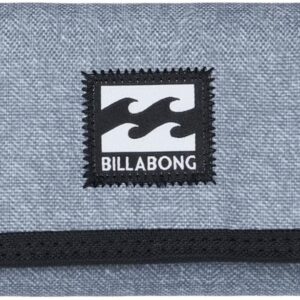
The first thing I noticed about the Billabong wallet was how little space it occupied. At 12 by 15 by 4 centimeters and weighing only 60 grams, it felt almost weightless when I picked it up. The synthetic material had a different texture than leather—smoother, more uniform, but still substantial enough to feel durable. The light grey heather color was neutral without being boring, fitting well with the casual clothing I typically wear for weekend activities and travel. What stood out immediately was how everything I actually needed fit comfortably inside, without the forced compression I’d experienced with my previous wallet.
During daily use, the fold design proved surprisingly practical. It opened easily with one hand, yet stayed securely closed when not in use. The included keychain became more useful than I’d anticipated, allowing me to keep my most essential keys connected to the wallet without adding significant bulk. I found myself appreciating small details I hadn’t considered before, like how the synthetic material didn’t absorb moisture the way leather sometimes did, or how the compact shape meant it never caught on anything when I pulled it from my pocket. These might seem like minor observations, but they added up to a significantly different experience from what I’d grown accustomed to.
Using it during actual outings revealed its true strengths. At a Wofford basketball game, I noticed how easy it was to retrieve my ticket and payment method without fumbling through multiple compartments. The lightweight nature meant I barely felt it in my pocket, even when standing and moving through the arena. Later, during travel that included watching Dortmund vs Heidenheim, the wallet’s practical advantages became even more apparent. Going through airport security was smoother with fewer items to manage, and having everything consolidated in one slim package made navigating foreign currency and transportation cards more straightforward than I’d expected.
The wallet’s performance across different seasons also stood out. During autumn outings when I might be wearing lighter jackets, and through winter months with heavier coats, its size remained consistently manageable. It never created that awkward bulge that makes you constantly aware of something in your pocket, nor did it add noticeable weight to bags or pockets. I found myself using it for everything from quick grocery runs to longer travel days, and it adapted seamlessly to each situation. The synthetic material held up well against occasional rain and daily handling, showing no signs of wear despite regular use.
Reflection
I didn’t realize at the time that switching to a different wallet would reveal so much about how I approach everyday objects. The change forced me to consider what I truly need versus what I carry out of habit or expectation. Having used the Billabong wallet through various scenarios—from local Wofford basketball games to international travel for matches like Dortmund vs Heidenheim—I’ve come to appreciate how the right accessory can simplify rather than complicate daily life. The reduction in physical bulk translated to a reduction in mental clutter, something I hadn’t anticipated when making the switch.
There’s something revealing about how we choose the objects we carry every day. We often stick with what’s familiar, even when it no longer serves us optimally. My old leather wallet had sentimental value and a certain aesthetic appeal, but it wasn’t designed for how I actually live my life. The synthetic material of this wallet, while less traditional, better suits my need for something lightweight and low-maintenance. It doesn’t require special care or break-in periods; it just works from the first day you use it. This practicality has come to feel more valuable than the perceived prestige of certain materials.
What surprised me most was how this small change affected other aspects of my daily routine. Carrying less made me more mindful about what I actually need versus what I might need. I became more intentional about which cards I carried, which receipts I kept, and how I organized my essentials. The wallet’s simplicity encouraged me to adopt a more minimalist approach to other areas of my life as well. It’s interesting how a single functional object can influence broader habits and perspectives, often in ways you don’t expect when you first acquire it.
The experience has made me more attentive to how design choices impact daily usability. Things I might have dismissed as minor details—the exact dimensions, the weight, the inclusion of a keychain—have proven to significantly affect how an object integrates into your life. When something works well, you stop thinking about it and just use it. That’s ultimately what I’ve found with this wallet: it does its job so unobtrusively that I often forget it’s there until I need it. This quality of fading into the background while remaining fully functional strikes me as the mark of thoughtful design.
Conclusion
Looking back over months of use, what stands out isn’t any single feature of the wallet, but how consistently it has performed across different situations. From casual local outings to more significant travel involving events like Wofford basketball games and Dortmund vs Heidenheim matches, it has proven adaptable and reliable. The synthetic material has held up well, the size remains practical, and the lightweight nature continues to make daily carry more comfortable than I’d previously experienced. These might seem like small benefits, but they add up to a noticeably better experience over time.
The wallet hasn’t transformed my life in dramatic ways, but it has eliminated numerous minor frustrations I’d accepted as normal. I no longer think about whether my wallet will fit comfortably in a particular pocket or add unwanted weight to a bag. I don’t worry about it getting damaged by occasional exposure to rain or daily handling. These small freedoms might seem insignificant individually, but collectively they contribute to a smoother, more effortless daily experience. It’s the absence of problems rather than the presence of spectacular features that has made the biggest difference.
What I’ve come to appreciate most is how this experience has changed my perspective on everyday objects. We often focus on finding specialized solutions for specific problems, when sometimes what we need are versatile tools that handle the basics exceptionally well. This wallet doesn’t try to do everything; it just does a few essential things very reliably. That focused functionality has proven more valuable than any number of extra features might have been. It serves its purpose without demanding attention or adaptation on my part.
Moving forward, I find myself applying this same principle to other aspects of my life—seeking out objects that perform their core function well without unnecessary complexity. The right balance between form and function, between durability and lightweight design, between capacity and compactness—these considerations now inform how I choose many everyday items. Sometimes the most significant improvements come not from revolutionary changes, but from finding better versions of the ordinary objects we use every day. In that sense, this wallet has been more than just a practical accessory; it’s been a reminder that small, thoughtful design choices can meaningfully enhance daily experience.